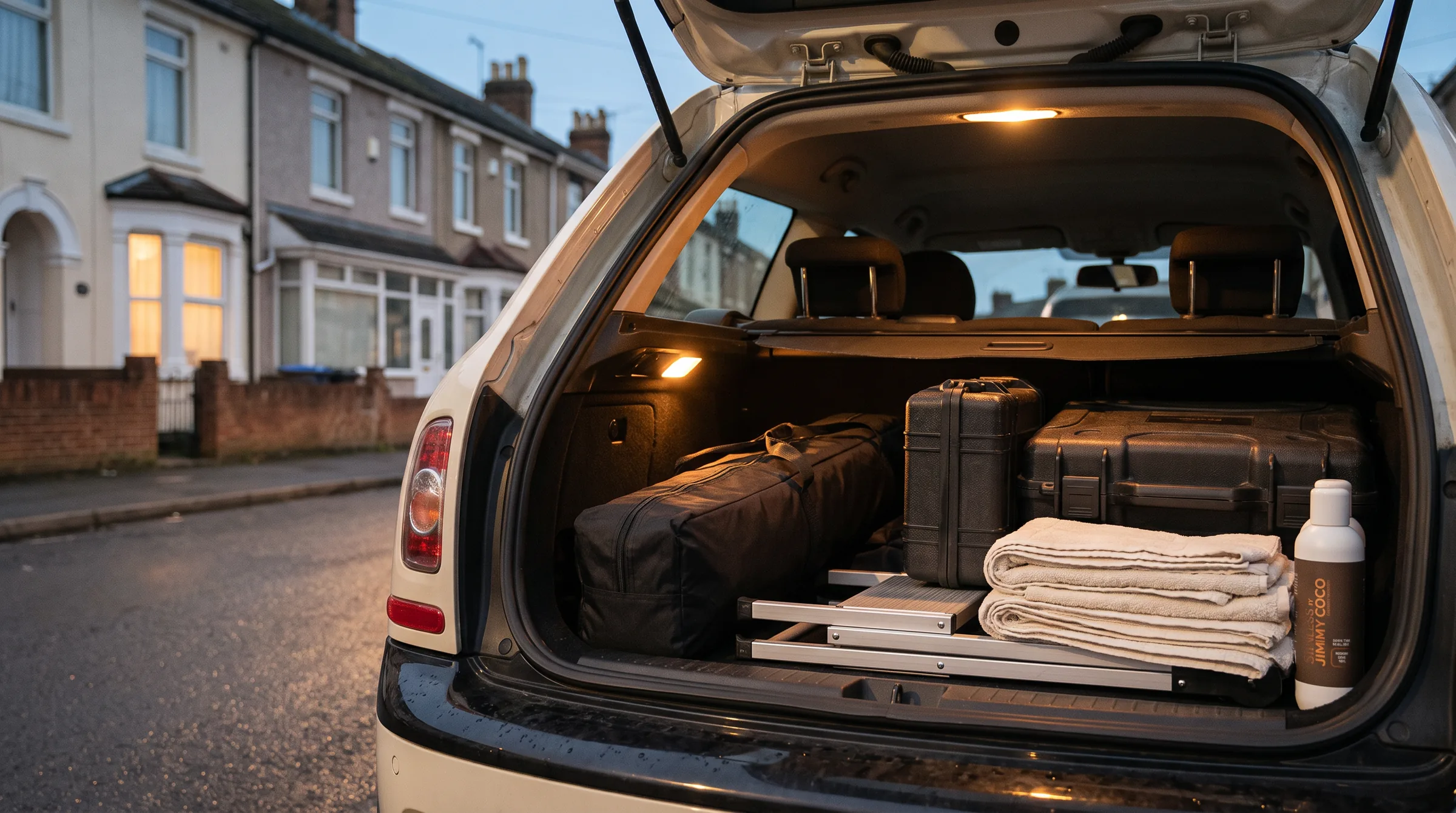
Using the assumptions in this example, a £30 mobile tan with a fourteen-mile round trip leaves £18.61 after treatment and vehicle costs. Once you include driving, setting up and packing away, the appointment takes 75 minutes. That works out at £14.89 for each modelled working hour.
The same treatment in a fixed room leaves £17.66 and takes 25 minutes, giving an hourly figure of £42.38. The amount remaining from the treatment is similar; the difference is the extra time associated with each mobile booking.
Mobile tanning has some genuine advantages. There is no rent for the room, the initial financial risk is lower, and clients value the convenience. It can work particularly well for bridal parties, events and group bookings.
The difficulty comes with single appointments that involve a longer journey. Once travel and setup are included, a booking that looks profitable can produce a fairly modest hourly return.
This doesn't mean mobile tanning is a bad business model. It means you need to know which bookings make it work.
The assumptions used in this example
The calculations below are based on:
- A £30 treatment price
- A fourteen-mile return journey
- 35 minutes of total travelling time
- 40 minutes at the client's home
- 25 minutes for the same treatment in a fixed room
- Twelve tans a week, or 624 a year
- A room cost of £8.65 per treatment at that volume
- HMRC’s 55p simplified mileage rate
Your own result will depend on your prices, vehicle, working area and the amount of time each appointment takes. This is a worked example rather than a forecast for every mobile business.
Allowing for the cost of the journey
HMRC's simplified mileage rate for cars and goods vehicles increased from 45p to 55p for the first 10,000 business miles on 6 April 2026. It was the first increase to the main rate since 2011.
The rate covers vehicle costs such as fuel, insurance, servicing, repairs and depreciation. It doesn't mean that every car genuinely costs 55p for every mile travelled, but it provides a consistent allowance to use in this model.
For a fourteen-mile round trip:
14 miles × 55p = £7.70
At twelve tans a week, the room used in this example costs £8.65 per treatment. That means the vehicle allowance and room cost are only 95p apart.
This comparison will change with volume. Room rent is generally a fixed cost, so its cost per treatment falls as you become busier. Vehicle costs continue to be attached to each journey.
A solo mobile booking, worked through
The treatment uses the same solution and consumables whether it takes place in a salon or a client's home. The mobile booking also includes the journey.
| Per tan | |
|---|---|
| Client pays | £30.00 |
| Solution | −£2.14 |
| Disposables, liner and laundry | −£1.10 |
| Card fee | −£0.45 |
| Vehicle allowance, 14 miles at 55p | −£7.70 |
| Contribution before tax and other overheads | £18.61 |
The £18.61 is not take-home pay. It is what remains after the costs included in this model are deducted. General business costs such as insurance, equipment replacement, marketing, software, administration and tax still need to be covered.
How time changes the result
In this example, the mobile appointment includes 35 minutes of driving and 40 minutes at the client's home. The time at the property includes carrying the equipment inside, setting up, completing the tan, packing everything away and returning it to the car.
That gives a total of 75 minutes:
£18.61 ÷ 1.25 hours = £14.89 per modelled working hour
The fixed-room treatment leaves £17.66 after the same treatment costs and an £8.65 room allocation. At 25 minutes, that gives:
£17.66 ÷ 0.417 hours = £42.38 per modelled working hour
This isn't a comparison of complete annual earnings. The room figure doesn't include commuting, gaps between clients or opening and closing time. Both figures also exclude general administration and marketing. What it does show is how strongly travel and setup can affect the return from an individual appointment.
What a higher price would change
Charging more would improve the mobile figure. However, matching the room's £42.38 hourly contribution on a single booking under these assumptions would require a treatment price of approximately £65.
That price may be difficult to achieve in some areas. A smaller increase, a separate travel fee or premium positioning can still help, but price alone may not close the full gap.
The strongest improvement in this model comes from spreading one journey across several clients.
Why group bookings improve the numbers
The journey takes the same amount of time and carries the same vehicle allowance whether you tan one person or three at the same address.
| Clients at the address | Vehicle cost each | Average minutes per client, including travel | Contribution per modelled hour |
|---|---|---|---|
| 1 | £7.70 | 75 | £14.89 |
| 2 | £3.85 | 58 | £23.44 |
| 3 | £2.57 | 52 | £27.57 |
Three clients at one address produce an hourly figure that is 85% higher than a single appointment at the same treatment price.
This is why bridal parties, hen parties, prom groups and friends booking together can be so valuable to a mobile tanning business. They allow you to earn more from the journey without increasing the distance travelled.
Practical ways to protect your travelling time
Set a standard working area. Decide how far you are prepared to travel for a single booking and make that area clear before the client books.
Use a minimum booking value for longer journeys. Outside your usual area, you could require two or more clients, charge a travel fee or set a minimum spend.
For example: "Single appointments are available within five miles. Outside that area, a two-person booking or minimum booking value applies."
Encourage clients to book together. A small discount for a second person at the same address may cost less than making a separate journey to see them another day.
Group appointments by area. Fixed evenings for particular towns or postcodes can reduce total driving. You will still travel between addresses, but a planned route is usually more efficient than repeatedly returning to the same area.
Account for parking and local charges. Parking, tolls, congestion charges and clean-air charges can materially change the value of a booking. Where appropriate, include them in the quote before the client confirms.
Why deposits matter more for mobile bookings
A no-show in a fixed room costs you an appointment slot. A mobile no-show also leaves you with a wasted journey.
At a 3% no-show rate, twelve weekly bookings would produce roughly twenty no-shows over a year. That is only an assumption, so record your own cancellation and no-show rate.
By the time you have reached the client's address, you have completed the outward half of the journey. Once you return home, the full fourteen-mile trip has cost £7.70 under this model and taken 35 minutes, before allowing for the lost appointment.
A deposit or booking fee can help cover some of that loss. The amount, cancellation deadline and refund terms should be explained clearly when the client books.
Any retained deposit or cancellation charge should also be reasonable and proportionate to the loss caused by the cancellation.
A short note on mileage and tax
The 55p rate doesn't apply to every business in the same way. Simplified mileage expenses are generally available to sole traders and eligible partnerships. Different rules can apply to limited companies and company-owned vehicles, so check which method applies to your business.
The rate changes after 10,000 business miles. The first 10,000 miles receive the 55p rate, while each additional mile receives 25p. The earlier miles do not lose their 55p allowance.
At twelve weekly tans involving fourteen-mile journeys, the annual total would be 8,736 miles. At twenty weekly tans, it would be 14,560 miles:
(10,000 × 55p) + (4,560 × 25p) = £6,640
That produces an average deduction of 45.6p per mile. The lower average reflects a change in the tax deduction, not a sudden increase in the vehicle's operating costs.
Travel from home may be allowable. If you have no fixed workplace and travel from home to changing, temporary client locations, some or all of those journeys may qualify as business travel. It depends on how your business is organised, your normal working area and whether the business is genuinely itinerant.
Choose your vehicle-expense method carefully. Once simplified mileage is used for a vehicle, it generally needs to be used while that vehicle remains in the business. If capital allowances have already been claimed for the vehicle, simplified mileage cannot normally be used. Parking, tolls and congestion charges incurred wholly for business may be claimed separately.
Keep a current mileage record and take advice based on your own circumstances before making tax decisions.
Work out which of your bookings are paying
Look at your last twenty mobile appointments and record:
- The total return mileage
- The complete door-to-door time
- The number of clients at each address
- The amount charged
- The direct treatment and travel costs
- The contribution left per working hour
Pay particular attention to solo appointments with longer journeys. Those are the bookings most likely to require a travel fee, a minimum booking value, or a group-booking requirement.
Choose one change and test it for four weeks. You could reduce your single-booking radius, introduce an area evening or require two clients for longer journeys. Then compare the result with your previous bookings.
These figures are a model, not a forecast. The fourteen-mile return journey, 40 minutes on-site, 35 minutes of travel, a 3% no-show rate, and a 52-week working year are assumptions. Realistic journey, appointment and no-show figures will vary. Substitute your own numbers and check current HMRC guidance or ask an accountant about your tax position.